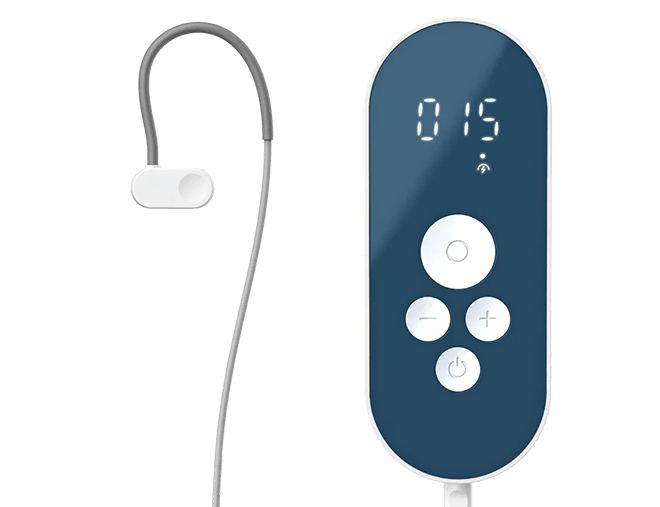
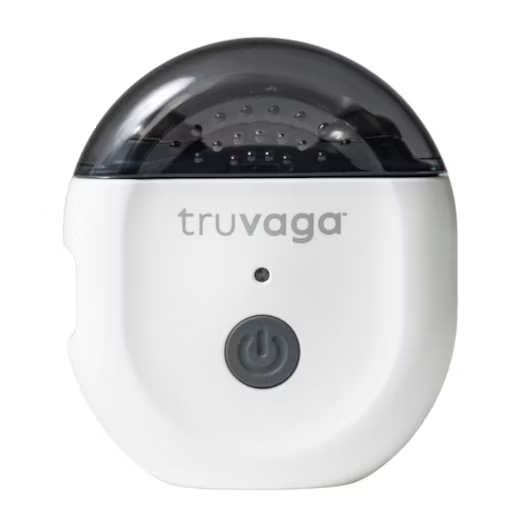
Most vagus nerve stimulation devices are non-invasive, meaning they stimulate externally without medication or surgery. But the stimulation site matters. Ear-based devices like Nuropod target the tragus, a specific point on the ear that has been used in clinical research because it provides access to a surface-level branch of the vagus nerve.
This matters because effective vagus nerve stimulation is not just about sending a signal. It is about applying that signal to the right pathway in a consistent way. Nuropod is built around targeted auricular stimulation, using electrical signals designed to travel through the vagus nerve toward the brainstem, where stress response, recovery, and autonomic balance are regulated.
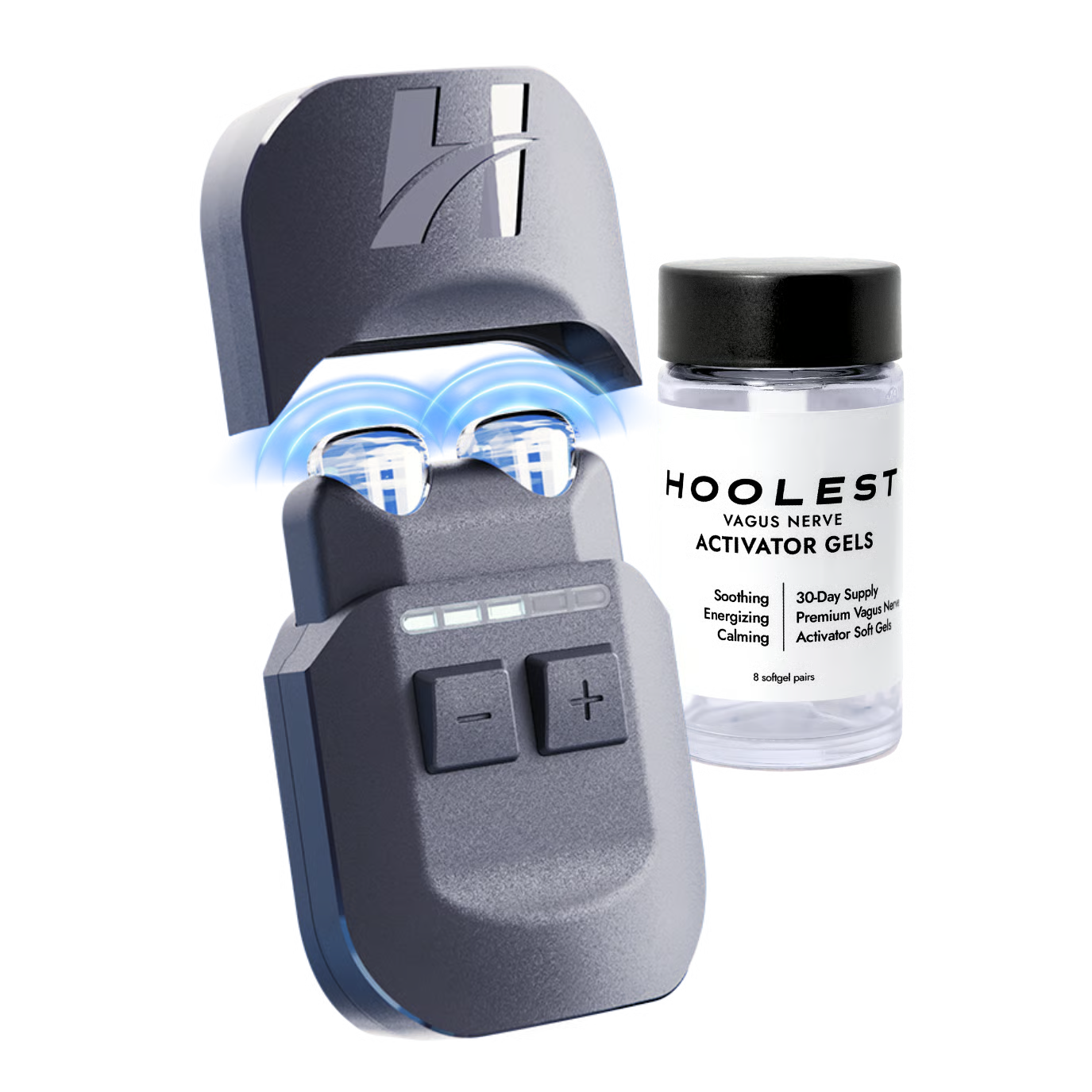
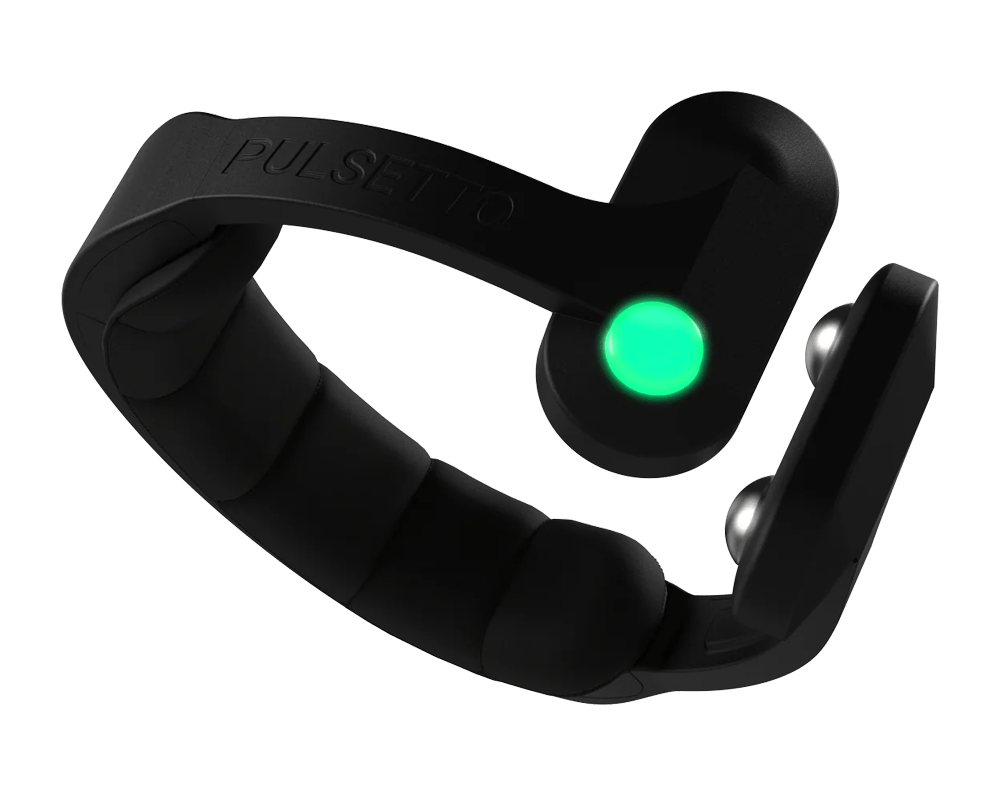
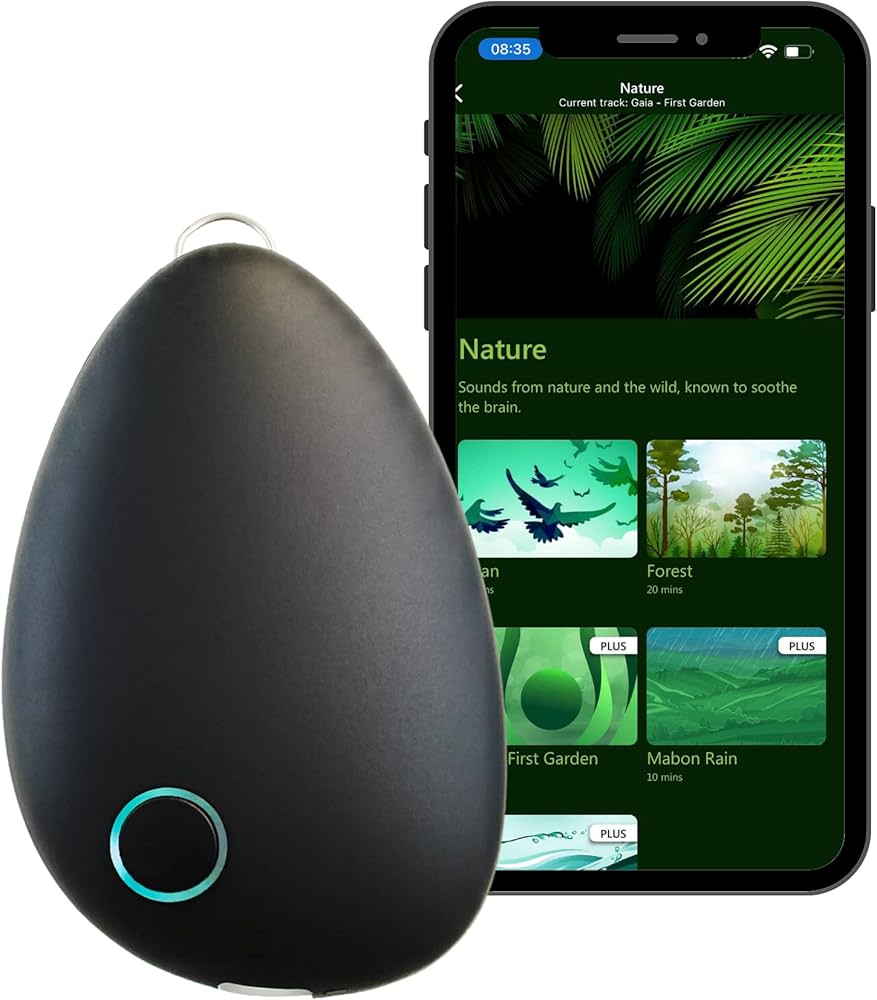
Neck-based devices, chest-based devices, and vibration tools can still support relaxation, but they do not all engage the vagus nerve in the same precise way. Electrical stimulation at a clinically used ear point is designed for more direct and repeatable neural activation, while vibration-based devices work more indirectly by encouraging calm and relaxation. That’s why it’s important to look beyond comfort and ask whether the device uses a consistent, clinically grounded stimulation method.